
The Mechanism of Development of the Antitumoral Immune Answer
The introduction of simulators of tumoral antigens
stimulates the production of antitumoral T-lymphocytes
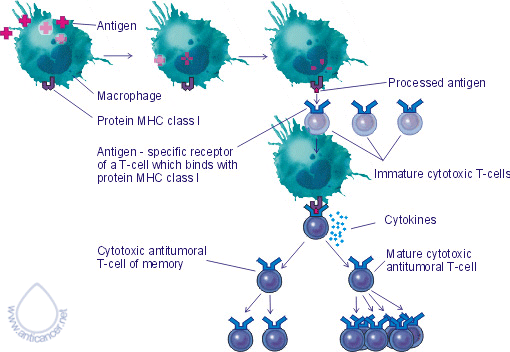
Fig. 1
The antitumoral T-lymphocyte can bind with only the
tumoral cell but does not bind with a normal cell
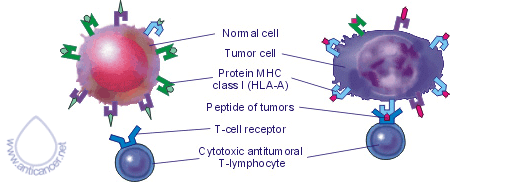
Fig. 2
The search of tumor cells with a help of the antitumoral T-lumphocytes

Fig. 3
The destruction of tumor cells by T-lymphocyte

Fig. 4
After a close contact with tumor cell the T-lymphocyte starts to excrete perforins, which incorporate into the membrane of the tumor cell.
The perforins form a pore in the tumor cell. Through this pore water starts to enter into the tumor cell. The cell swells out, bursts off and dies, where as the T-lymphocyte searches for a new target cell for the next attack.

The Interaction Between
the Immune System and Tumors
Apoptosis
FAQs - immunotherapy of tumors using RESAN

Antitumor vaccine. Home page